Wendy Puryear
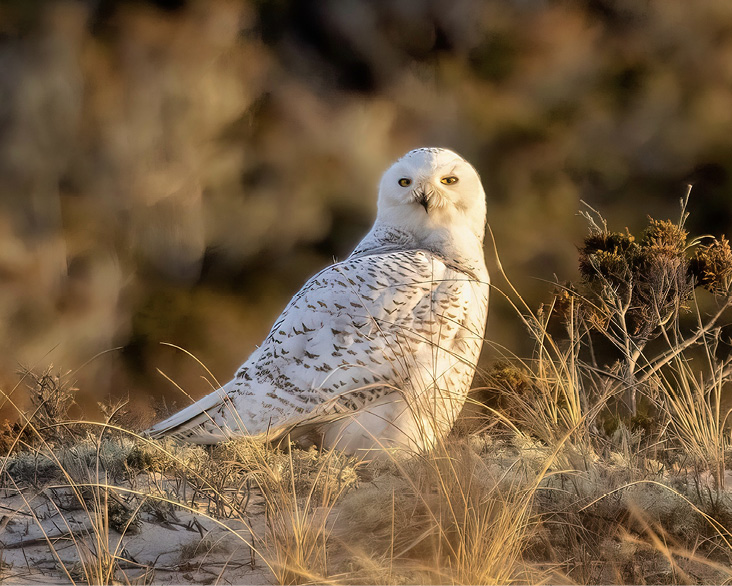
A Snowy Owl on Nantucket, one of the spillover species that has undergone HPAI mortalities in the region as a result of preying on infected birds. All photographs by Milton Levin.
Spring 2026 marks the fifth season that bird flu, also referred to as H5N1 or High Pathogenicity Avian Influenza (HPAI), has been in New England. After the virus initially hitched a ride across the North Atlantic Ocean, it underwent extensive expansion throughout North and South America and even into Antarctica (Fusaro et al. 2024). The best current evidence points to a gull species, potentially a Great Black-backed Gull, shuttling the virus across the North Atlantic and delivering it to the Western Hemisphere somewhere around Newfoundland in late 2021 (Caliendo et al. 2022).
The early arrival of HPAI in North America marked unprecedented die-offs in wild birds with broad species distribution and geographic spread. As the virus rapidly spread through wild birds, there was an almost immediate spillover into domestic poultry with parallel devastating impacts to backyard and commercial poultry operations. Agricultural industries rapidly enhanced biosecurity measures and public service announcements went out to the backyard chicken communities in an effort to clamp down on this new and unwelcomed arrival of HPAI into North America. The initial hopes were that a rapid and effective response would reduce domestic spillover, thereby also reducing the creation of a repeat source of HPAI that could spill back into wildlife. It was also initially hoped that a relatively quick population immunity would develop within the local wildlife species as they were exposed to and recovered from this new assault. The reduction of a domestic animal source of virus combined with the development of local wildlife immunity would potentially result in the virus reaching an equilibrium and subsiding after a few seasons.
To view the rest of the article you'll need to
subscribe. Bird Observer publishes original articles on birding locations, on avian populations and natural history, on regional rarities, field notes, field records, photographs, and art work.