Killdeer

(Charadrius vociferus) (KILL)

Photographic Identification Guide

  • killdeer.winthrop.beach.2021.05.23.P2780766.jpg
    1
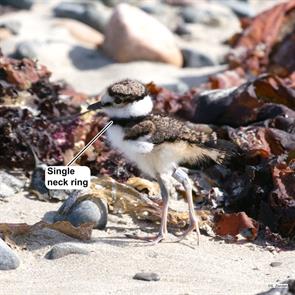
    Fig. 1. Killdeer. Partially grown chick. Note single black neck ring. Winthrop Beach, Winthrop, MA. 23 May 2021.
  • killdeer.winthrop.beach.2019.09.07.P2430231.jpg
    1
    Fig. 2. Killdeer. In juvenile, the lower breast band is sometimes obscured by white feathers. Winthrop Beach, Winthrop, MA. 7 September 2019.
  • killdeer.san.luis.nwr.merced.ca.2025.01.04.john.hiles.ML638237126.jpg
    0
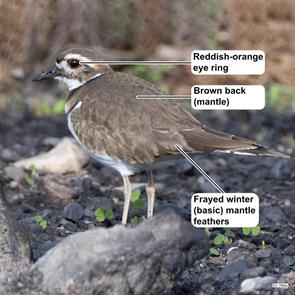
    Fig. 3. Killdeer. Winter (basic) adult with worn plumage. Merced, CA. 4 January 2025.
  • killdeer.arlington.reservoir.2021.04.14.P2760417.jpg
    1
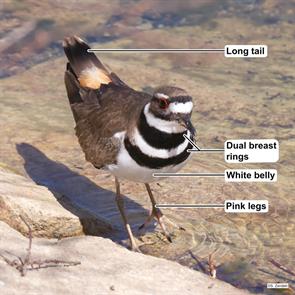
    Fig. 4. Killdeer. Spring (alternate) plumage. Note worn wing coverts. Arlington Reservoir, Arlington, MA. 14 April 2021.
  • killdeers.plum.island.2017.05.29.sam.zhang.ML285481421.jpg
    0
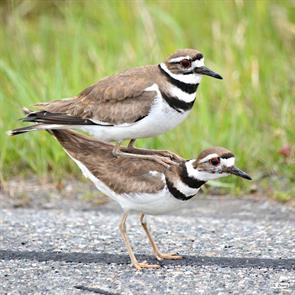
    Fig. 5. Killdeer pair copulating. Parker River National Wildlife Refuge, Newburyport, MA. 29 May 2017.
  • killdeer.bear.creek.2016.04.03..P1020734.jpg
    0
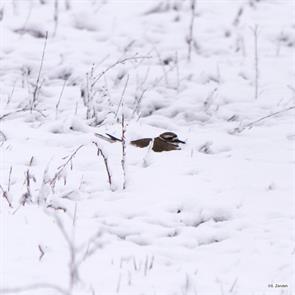
    Fig. 6. Killdeer on nest. Bear Creek Wildlife Sanctuary, Saugus, MA. 3 April 2016.
  • killdeer.umatilla.nwr.or.2012.04.04.DSCN8124.jpg
    0
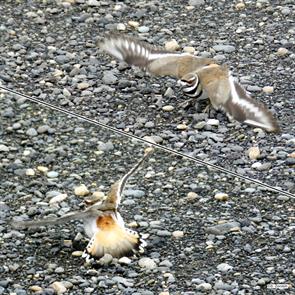
    Fig. 7. Killdeer. Feigned injury distraction display. Umatilla National Wildlife Refuge, OR. 4 April 2012.
  • killdeers.parker.river.nwr.2021.06.18.sam.zhang.ML355275631.jpg
    0
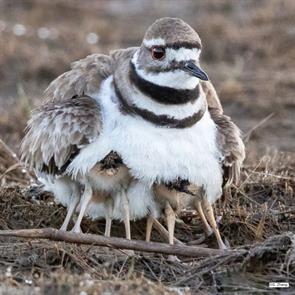
    Fig. 8. Killdeer brooding chicks. Parker River National Wildlife Refuge, Newburyport, MA. 18 June 2021.
  • killdeer.lorain.oh.2025.07.07.nadine.bluemel.ML638595690.jpg
    0
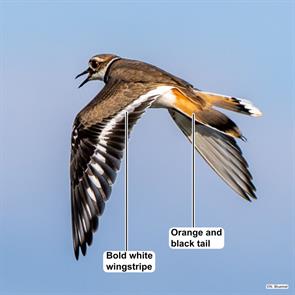
    Fig. 9. Killdeer. In flight, note long angled wings with bright white stripes and long orange and brown tail. Lorain, OH. 11 September 2019.
  • killdeer.fayette,pa.2025.07.08.alex.busato.ML638639893.semipalmated.plover.napatree.point.2017.08.02.jpg
    0
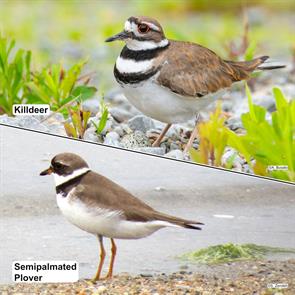
    Fig. 10. Comparison of Killdeer and Semipalmated Sandpiper. Note differences in size, leg color, bill color and pattern, breast and face pattern. KILL in Fayette, PA, 8 July 2025; SEPL in Napatree Point, RI, 2 August 2021.
In this guide, we provide as much detail as possible to help identify this species. The molt sequence for Killdeer barely follows the usual pattern for most shorebirds; throughout the seasons, most Killdeer plumages are rather similar. It is, therefore, difficult to age individual Killdeer without close examination of the plumage. The plumage and molt sequence is summarized below.
Chick: newly hatched baby is precocial, a fluff ball of brown and white on long legs.
The chick has only one black neck ring; see Fig. 1.
Juvenile: young birds, recently fledged, June to September.
See Fig. 2. These feathers are acquired immediately after the natal down is shed. 
Adult: feathers acquired after juvenile plumage.
See Fig. 4.
Killdeer is a common and widespread resident or migrant throughout North America, the Caribbean, Central America, northern South America and the coast of west-central South America. It is the best known and most easily recognized member of the plover family. Two black rings on its white breast and its far-ranging killdee calls make it unmistakable.

Size and weight

Females are slightly larger.
Body length:
9.25–10.5 in. (23–26 cm)
Wingspan:
23.5–25.25 in. (59-63 cm)
Bill length:
0.7–0.9 in. (18–22 mm)
Weight:
2.2-3.5 oz. (63–90 g)

Calls

These are some characteristic calls or songs of Killdeer.
Flight and alarm calls, Quebec, Canada, 5/20/2025:
Calls, Deep Lake, WA, 4/6/1982:

Plumage and other characteristics

A Killdeer chick has one dark ring around its neck. It is precocial, running about to forage shortly after emerging from the egg; see Fig. 1.

Killdeer in juvenile plumage has broad cinnamon or rufous margins to the back (mantle) feathers. Dual neck and breast bands are present, though the lower band is often partially obscured by pale feathers; see Fig. 2.

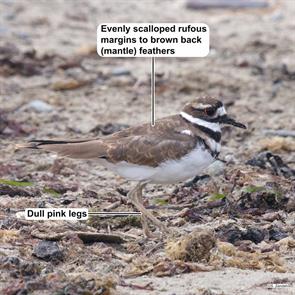
Killdeer in all adult plumages has a brown back (mantle), white belly and two dark bands across the upper breast and neck. Depending on degree of wear, it is possible to see narrow cinnamon or rufous margins on most back (mantle) feathers; see Fig. 3, Fig. 4, Fig. 5.

Once Killdeer develops feathers in June or July, its appearance barely changes over the seasons.

Killdeer’s bill is all black. The eye is surrounded by a bright reddish ring. The legs are pink or greyish pink; see Fig. 3, Fig. 5.

When wings are spread, in flight or during display, the upper surfaces are brown with bold white stripes. The long tail is orange, white and black; see Fig. 7, Fig. 9.

Breeding range, migration, wintering range, habitat

About the size of an American Robin, Killdeer is commonly seen in pastures and fields, running and stopping to forage on worms, grasshoppers and other small insects as well as some seeds.

Killdeer is widespread, nesting from coast to coast throughout North America except for far north subarctic and arctic areas. The breeding range extends south into Mexico, the Caribbean archipelago, and along the west coast of central South America.

Killdeer nest early (March) in Mexico and the deep southern United States. Nesting dates become progressively later in spring in more northerly sites. In our region, sometimes a Killdeer may nest early enough in April that the nest becomes surrounded by snow if there is a freak mid-spring snowstorm; see Fig. 6.

Killdeer nests on the ground, often in open country, farm fields or pastures. Roadsides, parking lots and gravel roofs may be used as well.

In most cases, Killdeer pairs are monogamous; mated pairs may winter together.

Killdeer parents do not feed the young, but brood and guard them while small; see Fig. 8.

If approached while sitting on the nest or guarding chicks, a Killdeer adult performs an elaborate feigned injury distraction display, leading the potential predator away. Using calls and dragging a wing and its tail, the adult limps away from the nesting site. When the tail is spread for this display, the rump and tail feathers are orange and white with black and white tips; see Fig. 7.

During the nonbreeding season, Killdeer migrates short distances. The northernmost range of wintering Kildeer is coast to coast across the central United States. In the south, wintering Killdeer reach northern South America.

In all seasons, Killdeer may be found in a variety of habitats, many associated with humans such as farms and fields, grasslands, pond edges, parking lots, beaches.

Similar species

Killdeer compared to Semipalmated Plover

Killdeer (KILL) is 1.5 times larger than Semipalmated Plover (SEPL); for a comparison image, see Fig. 10.

Note the following:

  • Killdeer has two rings on the breast and neck; Semipalmated Plover has only one.
  • Partially grown Killdeer chick may show one neck ring; In that case, the long pink legs, large head and fluffy appearance should eliminate Semipalmated Plover.
  • In a fully grown juvenile, the lower breast band is sometimes partially obscured by white or tan feathering.
  • Killdeer’s bill is relatively long and black. Semipalmated Plover’s bill is short and often bicolored, usually with orange at the base and dark at the tip.
  • Killdeer’s legs are pink or grayish pink. Semipalmated Plover’s legs are usually orange, sometimes dusky orange or yellow.
  • Killdeer’s face features a bright red orbital ring around the eye, and extensive white above the eyes and between the eyes and bill. Semipalmated Plover’s face may display a very thin yellow-orange eye ring, small white eyebrow and small amount of white between eyes and bill.
  • Killdeer’s back (mantle) feathers nearly always display narrow cinnamon or rufous margins. Semipalmated Plover’s back (mantle) is generally plain brown. Juvenile Semipalmated displays pale narrow margins on mantle feathers.
  • Killdeer in flight, and sometimes on the ground, often call their high-pitched characteristic killdee whistle. Semipalmated Plover’s call in flight is a lower pitched chew-ee.
  • In New England, Killdeer are usually present in their preferred habitats (farms and fields, some beaches) from their arrival in spring in March until they depart in mid-October. Semipalmated Plovers winter in tropical and South America. They first appear on New England beaches in mid-April, depart for the Arctic by late May and reappear on our beaches in mid to late July. They usually depart for southern areas by early October.

© Copyright 2026 Bird Observer, Inc. and Eric Swanzey.
Website code/design/development by Swanzey Internet Group LLC.
Supporting photography by Just Your Nature.
Privacy Policy | Terms of Use