Marbled Godwit

(Limosa fedoa) (MAGO)

Photographic Identification Guide

  • marbled.godwit.rockport.tx.2014.12.28.IMG_9080.jpg
    1
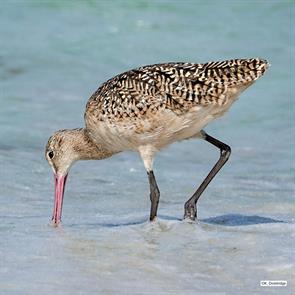
    Fig. 1. Marbled Godwit in winter (basic) plumage. Rockport, TX. 28 December 2014.
  • marbled.godwit.manatee.fl.2025.05.15.kathy.doddridge.ML635837878.jpg
    1
    Fig. 2. Marbled Godwit. Note extremely bleached, faded and abraded plumage on first-year bird. Manatee, FL. 15 May 2025.
  • marbled.godwits.wesstern.willet.san.diego.ca.2025.04.19.ted.keyel.ML636264781.jpg
    0
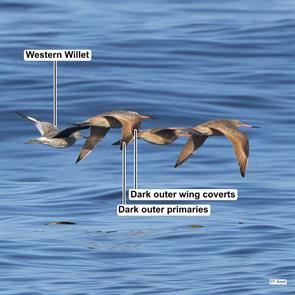
    Fig. 3. Marbled Godwits in flight. Note contrast of outer upperwings compared to paler inner wings. San Diego, CA. 19 April 2025.
  • marbled.godwit.kewaunee.wi.2025.05.18.brian.reinke.ML636071060.jpg
    1
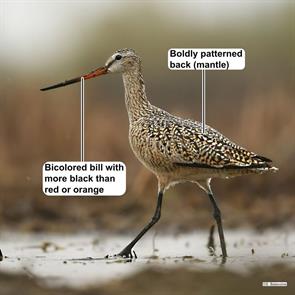
    Fig. 4. Marbled Godwit in spring (alternate) plumage. Kewaunee, WI. 18 May 2025.
  • marbled.godwit.le.demaine.du.roy.qc.2025.05.19.sacha.balavoine.ML636146133.jpg
    1
    Fig. 5. Marbled Godwit in spring (alternate) plumage. Le Demaine du Roy, Quebec. 19 May 2025.
  • marbled.godwit.mesa.co.2025.05.09.bill.schneider.ML635487198.jpg
    0
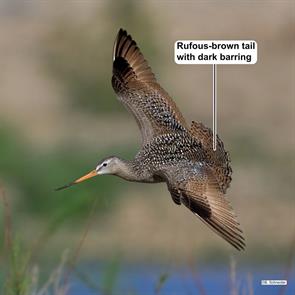
    Fig. 6. Marbled Godwit in flight. Upperparts range from cinnamon-rufous to dark brown and black. Mesa, CO. 9 May 2025.
  • marbled.godwit.frank.kahr.mill.creek.s.chatham.2024.10.26.0Y0A4927.jpg
    1
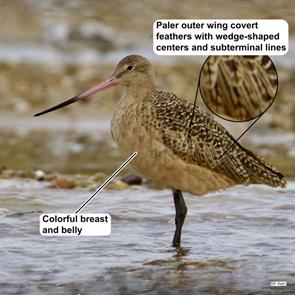
    Fig. 7. Marbled Godwit juvenile. Note richly colored but unbarred breast, complex patterns on outer wing coverts. Mill Creek, South Chatham, MA. 26 October 2024.
  • marbled.godwit.pt.reyes.marin.ca.2009.10.03.kimberly.roush.ML635961203.jpg
    1
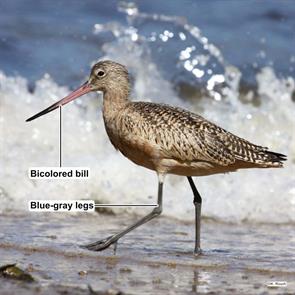
    Fig. 8. Marbled Godwit juvenile. Point Reyes, Marin, CA. 3 October 2009.
  • marbled.godwits.winthrop.beach.2016.09.11.P1200006.jpg
    0
    Fig. 9. Marbled Godwit juveniles. Note complex patterns on pale outer wing coverts. Winthrop Beach, Winthrop, MA. 11 September 2016.
  • hudsonian.godwit.marbled.godwit.ML67744571.monomoy.2017.09.02.a.kneidel.mago.jpg
    0
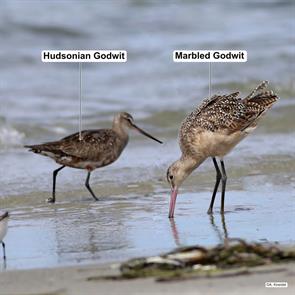
    Fig. 10. Comparison of juvenile Marbled Godwit with molting adult Hudsonian Godwit. Monomoy National Wildlife Refuge, Chatham, MA. 2 September 2017.
  • hudsonian.godwit.marbled.godwits.pacific.wa.a.thomas.ML609276770.2023.09.22.mago.jpg
    0
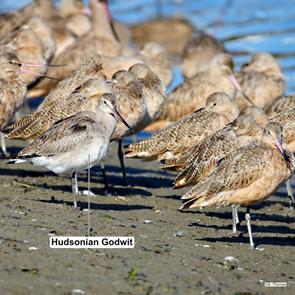
    Fig. 11. Comparison of juvenile Marbled Godwits with juvenile Hudsonian Godwit. In this plumage, Hudsonian is a much grayer bird. Pacifica, WA. 22 September 2023.
  • marbled.godwits.whimbrels.manitowoc.wi.2025.05.18.jon.bartell.ML636069989.jpg
    0
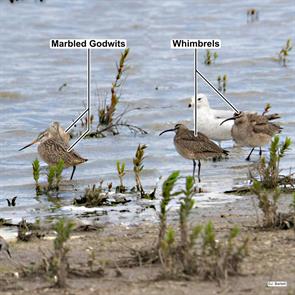
    Fig. 12. Comparison of Marbled Godwits with Whimbrels. Note differences in size, plumage color, bill shape and head markings. Manitowoc, WI. 18 May 2025.
In this guide, we cover the features, in order of importance, to look for on these birds. When discussing plumages, we use the terms winter, spring, and summer to refer to northern hemisphere temperate zone seasons. Because these birds spend different parts of the year in the northern and southern hemispheres, the correct technical terms for the plumage stages—basic and alternate—help avoid the confusion of seasonal terminology. 
Photos in the album are arranged in this order:
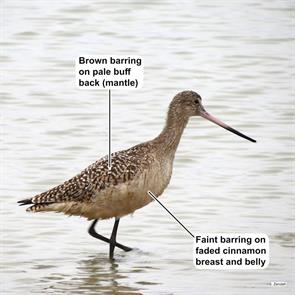
Basic: buff with bold brown barring on back (mantle), faint or no barring on pale cinnamon breast; roughly November to February.
Marbled Godwit begins the gradual molt to winter (basic) plumage in mid-July and usually completes it by December; see Fig. 1. This plumage may last through the first spring after hatch year; see Fig. 2.
Alternate: spring and summer or breeding plumage, late February to July.
Beginning in late February, winter (basic) feathers on second year Marbled Godwit are gradually replaced by spring (alternate) feathers; see Fig. 4, Fig. 5. By late June, alternate feathers begin to show wear and are gradually replaced by winter (basic) plumage.
Juvenile: young birds, recently hatched, August to October.
Juvenile feathers are acquired on the breeding grounds immediately after the natal down is shed and before the young begin their southbound migration; see Fig. 7, Fig. 8.
Marbled Godwit (Limosa fedoa) (MAGO) is one of our largest and most spectacular sandpipers. The combination of warm cinnamon-colored plumage, long, upturned, bicolored bill and long bluish legs make this bird nearly unmistakable in the field.

Size and weight

Females are larger and have longer bills.
Body length:
16.75–19.25 in. (42–48 cm)
Wingspan:
28–32 in. (70–80 cm)
Bill length:
3.2–5.1 in. (82–130 mm)
Weight:
10–16 oz. (285–454 g)

Calls

Calls in Valley County, MT, 2015:
Calls in Clay County, MN, 2007:

Plumage and other characteristics

With its long legs, neck and bill, Marbled Godwit is one of our largest shorebirds; it is the largest of the godwits.

The bill is tapered, pointed, slightly upturned and two-toned with brownish orange or pink at the base and a dark tip; see Fig. 8.

In breeding (alternate) plumage, the bill is more extensively dark; see Fig. 5.

The long legs are blue-gray; see Fig. 8.

Throughout the seasons, Marbled Godwit plumages are somewhat similar. Distinguishing juvenile from winter (basic) or adult breeding (alternate) is not easy without careful and close-up study of plumage. The plumage descriptions below are general guides which may be difficult to apply in the field. Seasonal plumage variations are subtle and some remain undescribed by researchers.

In all plumages in flight, Marbled Godwit’s back (mantle), upper wings and upper tail are brownish cinnamon with dark brown barring but without much contrast. The outer primaries and outer wing coverts are darker than the rest of the wing; see Fig. 3, Fig. 4, Fig. 6.

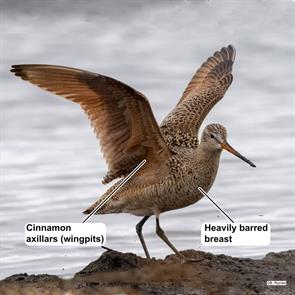
Underwings are relatively unmarked buffy or cinnamon; axillars (wingpits) are usually bright cinnamon; see Fig. 4.

Juvenile feathers that replace downy chick plumage are buffy with brown barring on the back (mantle) and rich, unmarked chestnut on the breast; see Fig. 7, Fig. 8, Fig. 9. Note the complex pattern on the outer wing coverts; those feathers have wedge-shaped or arrow-shaped dark centers and subterminal dark margins.

Winter (basic) plumage is pale buff or faded cinnamon with brown barring on back (mantle) and faint or no barring on neck, breast and belly; see Fig. 1.

Winter (basic) plumage on many birds in their first year of life often continues to fade when they do not molt fully in spring. By May or June of their first year, the plumage may be highly bleached and abraded; see Fig. 2.

Worn first year feathers are replaced gradually until the bird approaches its second spring when the molt to full breeding (alternate) plumage occurs. This definitive breeding plumage is boldly and richly patterned on the back (mantle), wings and tail and heavily barred on the neck, breast and upper belly; see Fig. 4, Fig. 5, Fig. 6.

Breeding range, migration, wintering range, habitat

Marbled Godwits nest in three separate areas of North America:
  • The bulk of the population breeds in the upper Midwest: Montana, the Dakotas and Minnesota, and the three central Canadian provinces: Alberta, Saskatchewan and Manitoba.
  • Western shores of James Bay in Ontario.
  • Southern shores of the Alaska Peninsula.
Marbled Godwits nest on the ground. Nesting habitat is primarily short grass or other short vegetation, usually away from wet areas.
Main food items during the nesting season, particularly in breeding areas in central North America, consist of insects (primarily grasshoppers), aquatic plant tubers, leeches and small fish. Similar food items are consumed at interior staging areas during migration.
At coastal staging and wintering areas, which are mostly mudflats, Marbled Godwits feed on marine or fresh water crabs, small mollusks and worms.
Most Marbled Godwits are relatively short-distance migrants. Many winter along the California coast and south into Central America’s west coast. A number of birds also winter along the southern Atlantic coast of the United States and the Gulf of Mexico.
In New England, Marbled Godwits are rare during spring migration. During fall, they turn up with some regularity at favored coastal locations on Cape Cod, Plum Island, and Maine, Rhode Island and Connecticut coasts. They also show up sporadically on Massachusetts beaches such as Revere, Winthrop, Wollaston and Plymouth.

Similar species

Marbled Godwit compared to Hudsonian Godwit

Marbled Godwit (MAGO) is usually larger and longer-billed than Hudsonian Godwit (HUGO). For comparison, see Fig. 10, Fig. 11.

Note the following:

  • In flight in all plumages, Marbled Godwit is cinnamon colored overall and has darker, brownish outer wings. Hudsonian Godwit has a black and white tail, white stripes on the upper wings and dark, nearly black, underwings.
  • Marbled Godwits, though never common, are seen with regular frequency during fall migration in many Massachusetts and other New England coastal localities. The number of Hudsonian Godwits seen in southern New England has plummeted in the past 40 years.

Marbled Godwit compared to Whimbrel

Marbled Godwit (MAGO) is slightly smaller than the similarly chunky, long-billed Whimbrel. For comparison, see Fig. 12.

Note the following:

  • Marbled Godwit’s plumage tone is a warm cinnamon or reddish buff. Whimbrel’s plumage tone is grayish brown.
  • Marbled Godwit’s bill is upturned and two-toned: pinkish or orange at the base, black at the tip. Whimbrel’s bill is downcurved and the inner half of the lower mandible is often pinkish.
  • Marbled Godwit’s face is pale with a dark line from the eye to the bill. Whimbrel’s face is marked with well-defined parallel dark lines through the eyes and crown.
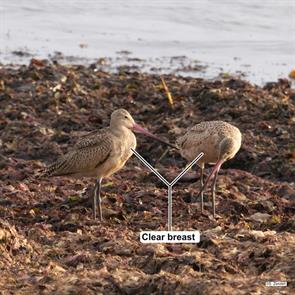
  • Juvenile Marbled Godwit is cinnamon-rufous on the breast with no streaks or other dark marks. Juvenile Whimbrel has a clear or pale buffy breast with fine brown mottling or streaking.
  • In flight, both species are dark on the back (mantle) and tail, somewhat paler on the underparts.
  • Marbled Godwit’s calls are harsh, single or double high-pitched barks. Whimbrel has a mellow whistled call in flight, often repeated 4 times.

© Copyright 2026 Bird Observer, Inc. and Eric Swanzey.
Website code/design/development by Swanzey Internet Group LLC.
Supporting photography by Just Your Nature.
Privacy Policy | Terms of Use